


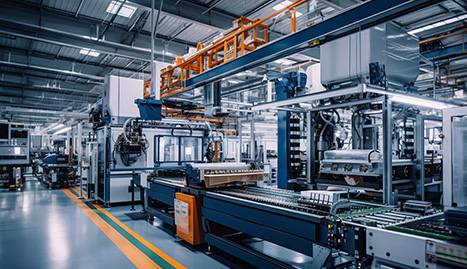

The CNC horizontal milling and boring machine, as a key piece of equipment in high-end manufacturing, has its technological evolution closely intertwined with market demands. It is accelerating its transformation towards intelligence, complexity, high precision, and greenness. The following is a systematic overview of its core development trends:
Integrating intelligence and automation to the fullest extent
Upgrade of intelligent control system: Integrating the industrial internet platform, it supports adaptive adjustment of processing parameters, fault prediction and remote diagnosis, reducing the need for manual intervention. For instance, equipping with an intelligent diagnostic system enables real-time monitoring of the machine tool's operating status, providing early warnings for tool wear or mechanical failures, thereby enhancing equipment utilization.
Popularization of automation functions: Automatic tool changing systems, automatic tray exchange systems, etc. have become standard features, significantly enhancing processing efficiency and meeting the requirements of mass production. Some high-end models have achieved integration of unmanned production lines, adapting to the flexible production needs of intelligent manufacturing factories.
Complexification and multi-functional integration
Enhanced multi-process integration capability: Through modular design, the machine tool can integrate milling, boring, drilling, tapping, turning of external circles, and three-dimensional curved surface processing functions, achieving "one-time clamping, complete process completion", significantly reducing clamping errors and processing cycle time.
Five-axis linkage technology breakthrough: Supports five-axis linkage and rotating tool center point functions, enabling efficient processing of complex spatial curved surfaces and irregular parts. It can meet the processing requirements of high-difficulty workpieces such as aerospace rotors and mold cavities, significantly improving processing accuracy and surface quality.
High-precision and high-stability technological breakthroughs
Full closed-loop control and error compensation: Full closed-loop control is achieved through the use of linear optical encoders. Combined with reverse clearance compensation, pitch error compensation, and thermal deformation compensation technologies, the positioning accuracy is controlled at the micrometer level, ensuring long-term processing stability. For instance, the mineral bed and thermal balance design can effectively reduce the impact of thermal deformation on accuracy by 5.
High rigidity structure optimization: Through finite element analysis, the structures of key components such as the bed and the column are optimized. Rolling guide rails, heavy-duty bearings, and double-layer wall cast iron structures are adopted to enhance the bending and torsion resistance, making it suitable for large cutting volume processing scenarios and meeting the requirements of heavy equipment manufacturing.
Green Energy Conservation and Sustainable Development
Energy-saving technology application: By optimizing the transmission system to reduce energy consumption, adopting an efficient cooling and chip-discharging system to minimize resource waste, and introducing energy recovery devices in some models to lower carbon emissions, it complies with environmental protection policy requirements 3.
Implementation of green manufacturing standards: Green manufacturing standards drive product development. Enterprises must incorporate environmental protection concepts throughout the material selection, production process, and entire product lifecycle, such as using recyclable materials and reducing the usage of cutting fluids, in order to meet market entry standards and the global carbon neutrality goals.
Modular design and flexible production
Popularization of modular architecture: Adopting the modular design concept, it enables users to select functional modules such as tool magazine, turntable, and accessory head library according to their needs, quickly adapting to different processing scenarios, reducing the cost of equipment customization, and enhancing the product's versatility.
Enhanced flexible manufacturing capabilities: Through rapid changeover technology and intelligent process libraries, it enables rapid switching between multiple products and small-batch production, meeting the personalized demands of industries such as automobiles and molds, and helping enterprises cope with rapid market changes.
Evolution of regional markets and competitive landscape
The Rise of the Chinese Market: As the world's largest consumer of machine tools, the market size of CNC horizontal milling and boring machines in China is expected to steadily increase from approximately 15 billion yuan in 2025 to nearly 30 billion yuan in 2031, with a compound annual growth rate of about 8.5%. This growth is mainly attributed to the upgrading of manufacturing automation and the increasing demand for high-end equipment. The demand is concentrated in manufacturing-intensive regions such as East China and the Pearl River Delta, while the central and western regions have seen accelerated growth under policy support.
Local enterprises' technological breakthrough: Leading domestic enterprises have achieved breakthroughs in areas such as five-axis linkage and intelligent control through technology introduction and independent research and development. They are gradually narrowing the gap with international brands. It is expected that by 2031, the market share of domestic high-end products will exceed 60%. International brands are facing intensified competition from localization, and they need to consolidate their market positions through technological cooperation and capacity layout.
Policy-driven and Industry Collaboration
Policy dividends release: Policies such as "Made in China 2025" clearly support the development of high-end CNC machines, promoting the process of domestic substitution. Government subsidies and the effect of industrial clusters accelerate the transformation of technological achievements, helping enterprises break through the technical bottlenecks of core components and enhance the autonomy and controllability of the industrial chain.
Collaborative innovation in the industrial chain: Upstream raw material and core component enterprises intensify technological research and development, while downstream application fields deeply participate in demand customization, forming a "research and development - manufacturing - application" closed loop, promoting the development of products towards higher reliability and better adaptability.
In conclusion, the development trend of CNC horizontal milling and boring machines is characterized by dual driving by technology and market. Intelligence, complexity, high precision and greenness have become the core directions. In the future, with the acceleration of technological iteration and the deepening of application scenarios, the industry will accelerate its transformation towards high-end and customized directions, providing key support for the upgrading of global manufacturing.
Prev: How to select the appropriate machine tool guideway?
Next: 没有了